
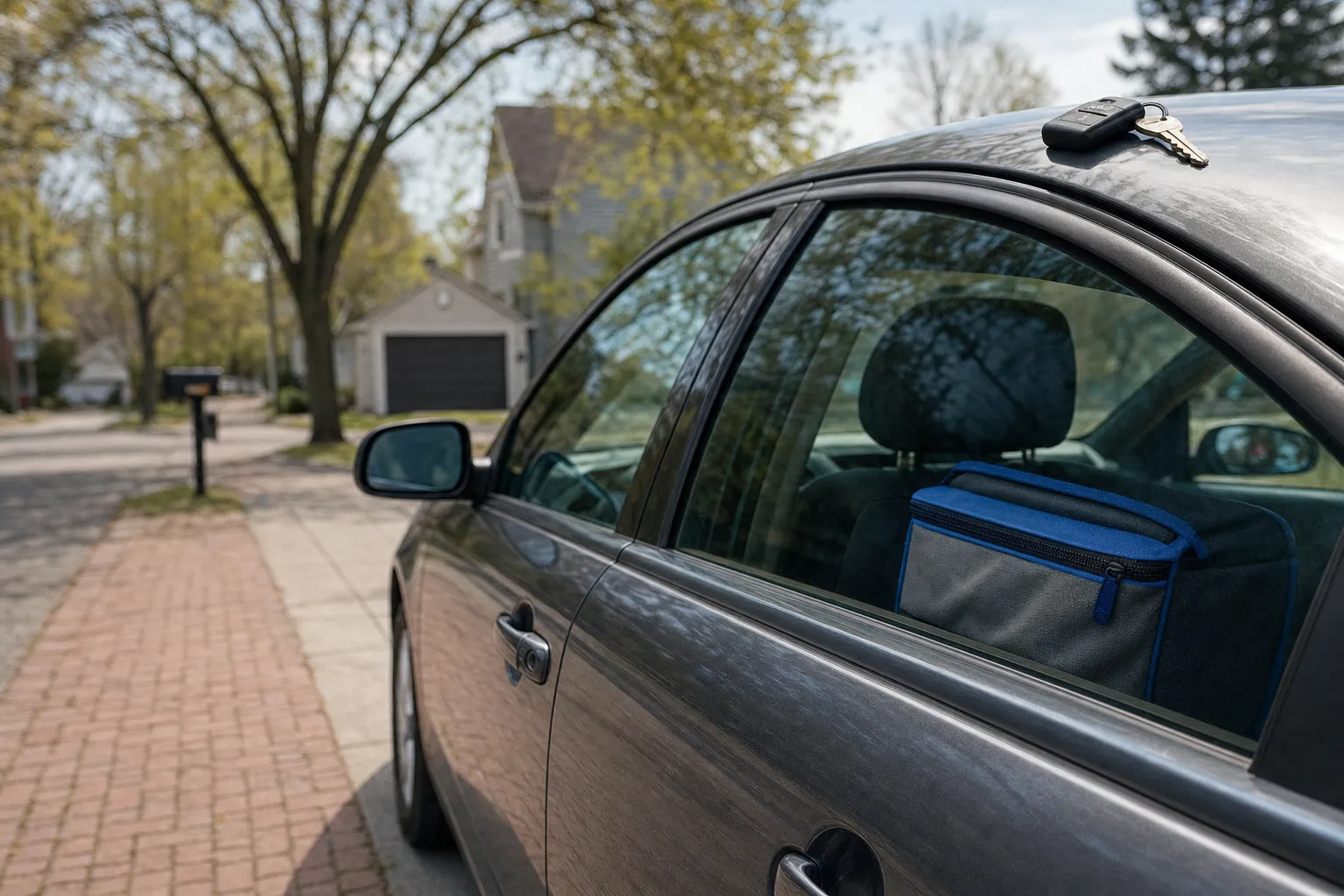
Most people think a lost car key is simply a new key cut on the spot. In practice, lost key recovery usually includes confirming ownership, identifying the exact key type, cutting or ordering the right blank, and programming the transponder or fob when required, which changes the timeline and options.
Why lost key recovery is more involved than it looks
We see drivers assume one technician action fixes every lost key situation. That misunderstanding comes from older mechanical keys. Modern vehicles use transponder chips, rolling codes, or push to start fobs that interact with the vehicle immobilizer and require diagnostic steps and secure programming. Knowing the type of key up front helps set expectations for time on site and choices between cutting a spare, on the spot programming, or ordering a manufacturer key.
Common misunderstandings we correct quickly
- All car keys are the same. Not true. Keys can be plain cut metal, transponder chip keys, remote keyless entry fobs, or smart push to start keys. Each needs a different process.
- A key can always be copied without the vehicle. Some keys need the vehicle to be present for programming or to read vehicle specific data.
- Programming is instant and free. Programming takes time and professional tools. Some vehicles need extra steps or security access that take longer.
- The dealer is the only option. Dealers can be necessary for certain high security keys, but mobile locksmiths often provide faster, lower cost options for most lost key scenarios.
- You can safely DIY. Attempting DIY programming or forcing locks can trigger immobilizers or damage trims and locks.
How we approach a lost key recovery for drivers near Elsie Michigan
When you call us, we follow a clear process that keeps things efficient and transparent. Our mobile technicians work across Lansing, East Lansing, Okemos, Holt, Mason, Grand Ledge and nearby communities, so we usually arrive with the right tools for the most common key types.
- Confirm identity and location. We verify vehicle ownership and the vehicle location, and we confirm access is safe, especially when a driver is stranded roadside.
- Identify the key type. We determine whether the vehicle uses a mechanical key, a transponder, a remote fob, or a push to start system. That drives whether we cut a blank, program a chip, or order a replacement.
- Evaluate on site options. For many cars we can cut and program a replacement at the roadside. For some high security or newer models we may need to source a specific blank or use manufacturer procedures that add time.
- Cut or program the key. Our technicians use professional key machines and diagnostic tools to cut accurate blanks and program transponders or key fobs to the vehicle security system.
- Test before we leave. We always test the key and remote functions, confirm vehicle starts, and make sure locks operate correctly before we finish.
Watch out: Trying to force a lock, use inexpensive unproven programming devices, or break into sealed key modules can cause damage that raises repair costs. For modern transponder and push to start systems, professional tools and experience are essential.
What we ask you to have ready
Quick checklist to speed up recovery
- Vehicle make, model, and year.
- Vehicle Identification Number, if available.
- Proof of ownership such as registration or title and a photo ID.
- A description of the lost key type, if you know it, and whether a spare exists.
Having those items ready helps us determine whether we can finish the job on site or need to order parts.
Choices and tradeoffs you should understand
When a key is lost, you usually choose between three paths: on the spot replacement by a mobile technician, ordering a manufacturer key through a dealer, or using an immobilizer reset that the dealer sometimes requests. Each path has tradeoffs.
- Mobile replacement, our typical solution, is often faster and comes to you, which is practical for roadside situations. It covers many transponder and fob types.
- Dealer replacements may be needed for certain high security models or when manufacturer programming access is restricted. Dealers can take longer, and you may need to tow the vehicle in some cases.
- Ordering a new key blank can delay recovery by one or more days, but it may be the only option for rare key types or when a replacement must be matched exactly.
How to spot a good outcome
Good recovery means the new key works reliably for locking, unlocking, and starting, and it does not cause complications like immobilizer errors. Look for these quality markers when you review the work:
- Key turns smoothly and starts the vehicle consistently.
- Remote functions operate at expected range.
- No warning lights or immobilizer messages after the key is programmed.
- Technician explains the type of key made, any limits of the solution, and whether a second spare is advisable.
Pro tip: If you do get a replacement, ask about a second spare and where to store it. A spare kept in a secure place saves time and cost if you lose a key again.
Key takeaway
Lost key recovery is not a single action task. It involves identifying the key, confirming ownership, choosing the right replacement path, and precise cutting or programming. Preparation and an informed technician make the process faster and reduce surprises for drivers in Elsie and the Lansing area.
Frequently asked questions
How long does recovering a lost car key usually take?
For common transponder and fob types we often complete replacement on site within an hour. Vehicles that require ordering a specific blank or dealer involvement can take longer. See our guide on lost car key cost and timelines for more context.
Can a locksmith make keys for any vehicle model?
We work on most makes and models using professional tools for cutting and programming. A few high security or very new models may require dealer procedures. When dealer involvement is necessary we explain why and what to expect.
Do you program transponder keys and push to start fobs?
Yes, we perform transponder key programming and key fob programming as part of lost key recovery. If you have questions about a specific system, our page on transponder keys explains the basics and common compatibility issues.
What should I bring to speed up the process?
Bring your vehicle registration or title and a government issued ID when possible. Having the VIN helps us identify the correct key blank. See the Car Lockout Service details for examples of what our technicians ask for on site.
Will I always have to go to the dealer?
No. Many lost key situations can be resolved by a mobile technician at the roadside or at home. Dealers are only needed for certain restricted access keys or when manufacturer procedures require it.
Learn more and check our local listing
For additional reading about recovery options and expected timelines, see our pages on lost car key cost and transponder keys. To confirm current service areas and read customer feedback, check our Google Business Profile and the locations we serve in the Lansing area, including Elsie.
For an overview of our service area see the locations list on our site: service area locations.